$0.25 to $0.55 per sq ftEvery two to three yearsLate May to early October
Driveway sealing in Ottawa, on the right schedule and not before
Driveway sealing in Ottawa costs $0.25 to $0.55 per sq ft, roughly $150 to $350 for a standard 600 sq ft double. New asphalt waits 6 to 12 months for its first seal and then every two to three years, and Paving Experts Ottawa will tell you if your driveway is not due yet.
New asphalt cures six to twelve months before its first coat
Resealed every two to three years, never annually
Cracks routed and filled first, quoted as their own line
Applied above 10 C in dry weather, not on a booking date
Book a driveway seal
Tell us the size and when the driveway was last sealed.
If it is too early to seal, we will tell you and book you next season.
What a seal coat does and what it cannot do
Sealer is a maintenance coating. It is worth doing on the right driveway at the right time, and worth nothing on the wrong one.
It keeps water and UV off the binder
A seal coat is a sacrificial layer over the asphalt cement that holds the aggregate together. It slows oxidation, resists fuel and oil spotting, and stops water reaching the surface voids where it can freeze.
It does not repair anything
Sealer is a few millimetres of coating. It bridges nothing structural, fills no cracks worth mentioning and adds no strength. A driveway with alligator cracking or soft spots does not need sealing, it needs work underneath.
It can be applied too often
Every coat adds thickness. Build too many up and the sealer layer becomes thick and brittle, then cracks and peels on its own, leaving a patchy surface that has to be stripped rather than recoated.
Crack repair comes first and gets billed separately
Sealer is not a crack filler. Poured over an open crack it sags into it, leaves a depression that collects water, and does nothing to stop the crack moving. Anything wider than roughly 6 mm gets routed out to a clean reservoir and filled with hot rubberised crack sealant before the seal coat goes on. That work is priced on its own because the amount of it varies enormously between two driveways of the same size. Be careful with any quote that gives one flat number for sealing a cracked driveway. Either the crack work is not happening, or it is being absorbed by thinning the sealer, and thinned sealer is the cheapest way to make a driveway look black for one season.
Every two or three years, not every year
A seal coat wears from the surface down, mostly in the wheel tracks, while the coverage at the edges and the middle barely moves. Recoating before the old coat has worn down means new material going on over old material that is still fully there. Repeat that annually and you build a layer of sealer several times thicker than any one application was meant to be. Thick sealer does not behave like thin sealer. It has no flexibility to speak of, it sits on a surface that expands and contracts through every freeze-thaw event an Ottawa winter produces, and it cracks in a fine web of its own. Then it flakes. What you get is a driveway with patches of black coating peeling off a grey surface, which looks worse than an unsealed driveway and costs more to put right, because the accumulated coating has to be stripped before anything new can be applied. Annual sealing is a subscription, not a maintenance schedule.
6 to 12 monthsCure time before new asphalt takes its first seal coat
2 to 3 yearsHonest resealing interval on an Ottawa driveway, not annually
10 CMinimum temperature for application, in dry conditions with no rain forecast
24 to 48 hoursTime to keep vehicles off afterwards, longer in cool or humid weather
Our Process
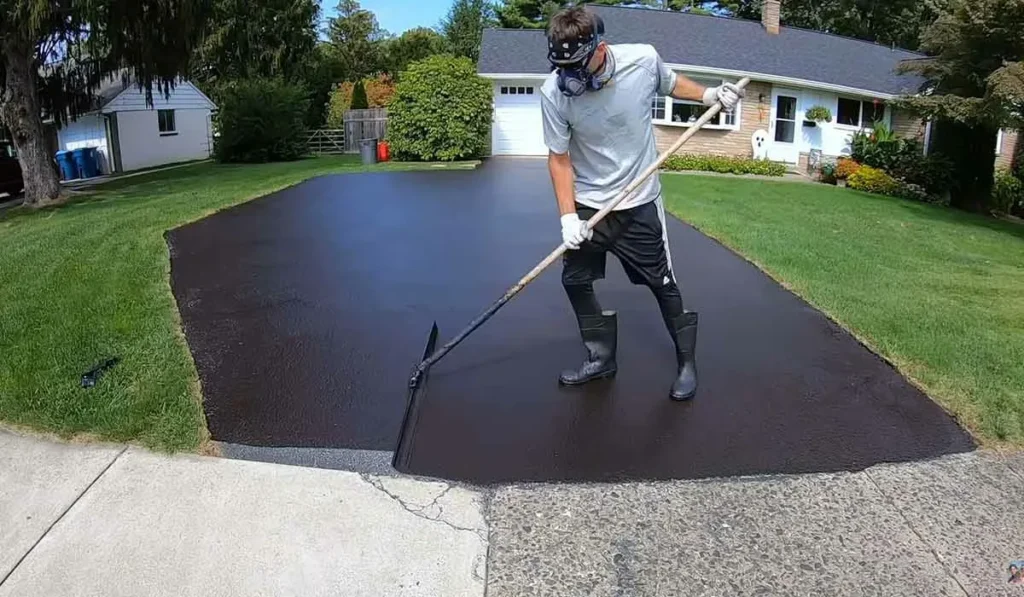
How a seal coat is applied
1
Check the age and the surface
How old the asphalt is, when it was last sealed, and whether it has cracking or soft areas that make sealing pointless. This is the step where we sometimes tell you to wait.
2
Clean it properly
Blow off and sweep the whole surface, scrub oil spots and treat them, and clear the edges. Sealer bonds to asphalt, not to dust, and a coat applied over grit lifts in sheets.
3
Repair the cracks
Route out cracks over about 6 mm and fill them with hot rubberised sealant. Let that set before anything is coated over it.
4
Apply and keep off
Applied in dry conditions above 10 C with no rain forecast. Then stay off it for 24 to 48 hours, longer in cool weather, and keep wheels from turning on the spot for longer still.
The sealing season is shorter than the sales calls suggest
Sealer is a water based or solvent based emulsion and it cures by evaporation. That needs warmth and dry conditions on both sides of the application.
Late May to early October
The practical window in this city, with daytime temperatures above 10 C and no rain in the forecast for the curing period. Late season sealing on a cool October afternoon cures slowly and incompletely.
Ground temperature sets the start
Early season is limited by ground temperature rather than air temperature, because the slab under the sealer is still cold well after the air has warmed up. A warm May afternoon over cold asphalt is not a sealing day.
Cure times stretch in cool weather
The 24 to 48 hour rule for keeping vehicles off assumes a warm dry spell. In September, plan on the longer end and keep the steering wheel turning while the car is moving. A power steering scuff on fresh sealer is permanent until the next coat.
What has to be true before a seal coat is worth paying for
There are driveways where sealing is money thrown away, and we would rather say so at the quote than take the booking.
The asphalt is old enough
A driveway paved in the last six to twelve months is not ready. Fresh hot mix is still releasing the lighter fractions of its asphalt cement, and a coat over the top traps those oils in the binder.
It was not sealed last year
Each coat adds thickness. A thick accumulated sealer layer goes brittle and cracks and flakes on its own, independently of the asphalt underneath, and then it has to be stripped before it can be resealed.
The structure underneath is sound
A driveway with alligator cracking has a failed base and a few millimetres of emulsion changes nothing about that. Soft spots or standing water are a drainage problem sealer cannot reach.
The quote separates crack work from sealing
Crack repair is priced by linear footage, sealing by area, and the two vary independently. Any workmanship warranty is set out in your written quote, job by job.
Sealing prices in Ottawa
Coverage rates vary with surface texture and porosity, so an older rougher driveway drinks more material than a smooth one.
Most popular
Seal coat
$0.25 to $0.55 per sq ft
Roughly $150 to $350 on a standard 600 sq ft double
Surface cleaned and oil spots treated
Material choice affects the rate
Booked between late May and early October
Routing and hot rubberised crack sealant
Priced by linear footage of crack, not by area
Crack work done and set before sealing
You see both numbers separately
How long new asphalt cures before its first driveway sealing
This is the single most expensive mistake made with sealer in Ottawa, and it is usually made with good intentions. A driveway is paved in July, it looks beautiful, and somebody suggests protecting it before winter. So it gets sealed in September.
Fresh hot mix is still releasing the lighter fractions of its asphalt cement. That process takes six to twelve months, and it is what takes the mat from soft and pliable to properly hardened. Putting a seal coat over the top part way through traps those oils in the binder. The mat stays soft and scuffs easily under turning wheels, heel marks and kickstands. Worse, the sealer cannot bond properly to a surface that is still bleeding oil, so it goes on unevenly and lifts early.
A driveway paved in July gets its first seal the following season, not the same autumn. That is not a scheduling preference, it is how the material behaves.
When we turn a driveway sealing job down
A driveway that is genuinely at the end of its life is better left alone until it is replaced. Sealing it makes it look better for one season, which is sometimes exactly what a homeowner wants before selling, and we will do that if you ask with your eyes open. What we will not do is imply that a coat of sealer is buying you years you are not getting.
The same applies to a driveway that was sealed last year, to one paved in the last six to twelve months, and to one with alligator cracking or standing water. In each case the honest answer is to wait, or to spend the money on the thing that is actually wrong. If someone knocks on your door every spring offering to reseal, they are not reading your driveway.
Any workmanship warranty is set out in your written quote, job by job. Call (343) 314-8525.
Sealing questions
What does sealing a driveway cost in Ottawa?
Between $0.25 and $0.55 per square foot, which puts a standard 600 square foot double at roughly $150 to $350. Rough, porous older asphalt absorbs more material and sits at the upper end. Crack repair is a separate line because the quantity varies far more than the area does.
How long do I have to stay off it afterwards?
24 to 48 hours before parking on it, and longer in cool or humid weather when curing slows down. Foot traffic is usually fine sooner. The thing that marks a fresh seal is a power steering turn on a stationary wheel, so pull straight in and out for the first few days.
What is the difference between coal tar and acrylic sealer?
They are different materials with meaningfully different costs and properties. Coal tar emulsions are the traditional product and sit at the cheaper end. Acrylic and other alternative chemistries cost more per litre. We will name the material on the quote rather than writing sealer, and you can decide which you want on your property.
Does sealing fix cracks?
No. A seal coat is a few millimetres of coating and it bridges nothing. Poured over an open crack it settles into it and leaves a hollow that holds water. Cracks over about 6 mm are routed and filled with hot rubberised sealant first, as separate work.
Can a driveway be sealed too often?
Yes, and it is common. Each coat adds thickness, and a thick accumulated sealer layer goes brittle and starts cracking and flaking on its own, independently of the asphalt underneath. That surface then has to be stripped before it can be resealed. Two to three year intervals are the honest schedule. Anyone recommending an annual seal is selling sealer.
Find out whether your driveway is due
Tell us when it was paved and when it was last sealed, and we will tell you whether this year is the year.