New builds and replacements$8 to $14 per sq ft to repaveFull excavation included
New asphalt driveway installation, built from the subgrade up
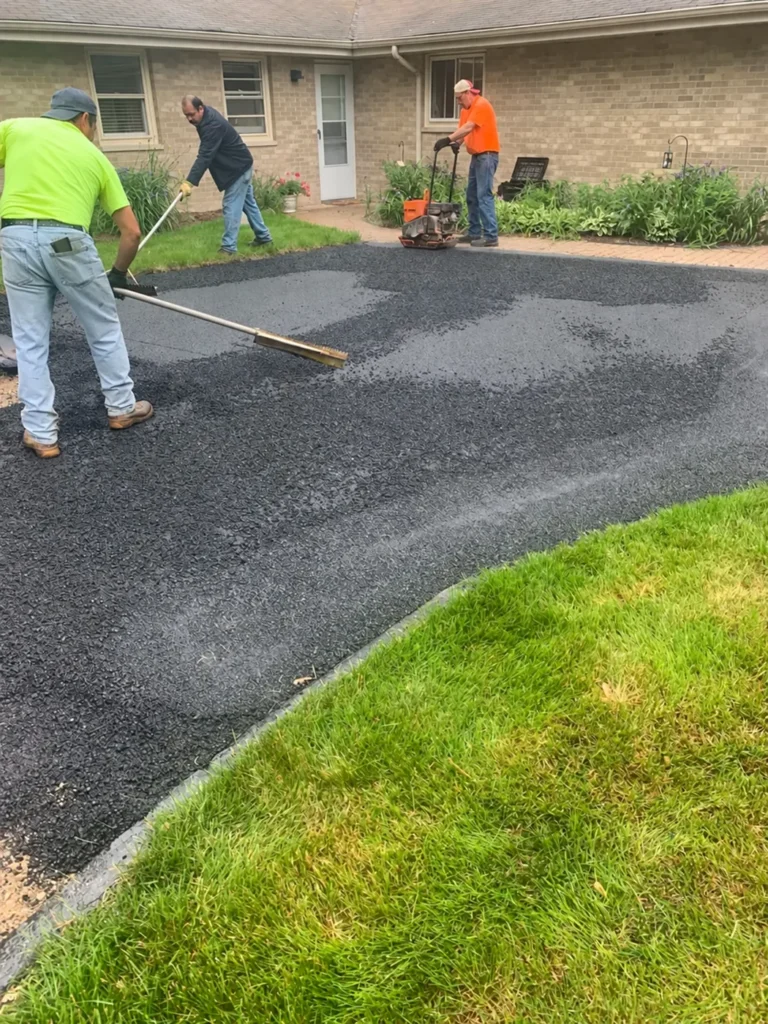
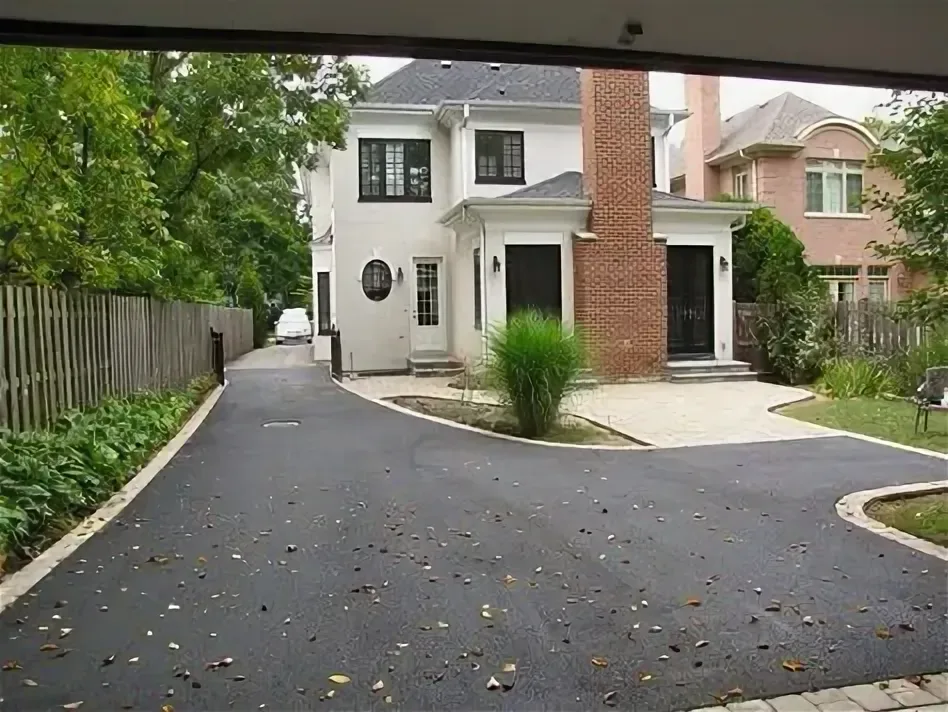
A new asphalt driveway in Ottawa costs $5 to $10 per sq ft, about $3,000 to $6,000 for a typical double, or $8 to $14 per sq ft when the old driveway comes out first. Most installs take two to three days, and Paving Experts Ottawa builds the base for Ottawa clay and frost before the asphalt goes down.
Full dig-out, granular in compacted lifts, finished surface
Geotextile where the subgrade is soft marine clay
Drainage corrected before the surface goes down
Old surface removed and hauled, not buried
Price a new driveway
Tell us the size and whether there is an existing surface to remove.
We will tell you if an overlay would do instead.
What a full installation includes
A replacement is not a resurface. These three steps are the difference, and they are where the cost sits.
Removal and disposal
Breaking out and hauling the old surface runs roughly $3 to $5 per square foot on its own. Thick multi-layer asphalt, or concrete underneath, changes that number, and we check before quoting.
Excavation to real depth
Going deep enough to place proper granular, not just deep enough to fit the asphalt back in. On soft subgrade the dig-out gets deeper and geotextile goes in before any stone.
Granular in compacted lifts
Granular placed and compacted in layers rather than dumped and levelled. Compaction is measured against Standard Proctor density, which is the only meaningful way to talk about it.
Telling surface failure from structural failure
A driveway ends its life in one of two ways, and the two look similar from a car window. They need completely different work, which is why we will not quote a replacement from a photograph.
Surface failure
Fading, fine cracking, light ravelling at the edges and stains, with the driveway still firm underfoot everywhere. The structure beneath is sound. That is a resurfacing or maintenance conversation and costs a fraction of a rebuild.
Structural failure
Alligator cracking where the surface has broken into interconnected plates, areas that feel soft or springy underfoot, standing water, or sections sitting visibly lower than they used to. New asphalt over any of that reproduces the same failure, usually within two winters.
How we tell them apart
By walking the whole area and leaning on it rather than looking at it. Soft spots are found with feet. We also probe for depth and check where water sits an hour after rain stops.
The reason a new driveway can heave worse than the old one
The City of Ottawa’s own geotechnical guidelines identify sensitive marine Champlain Sea clay as the primary problem soil under much of the city, and note something most homeowners never hear: it is vulnerable to frost heaving when previously unexposed to freezing. A driveway that has sat undisturbed for forty years has clay beneath it that frost has never properly reached. Dig that driveway out and you expose that clay for the first time. If the replacement goes back with a thin base and no thought about where water drains, the new surface can move more than the old one did. This is not an argument against replacement. It is an argument for excavating to a real depth, separating soft subgrade from clean stone with geotextile, and making sure water leaves the structure instead of sitting in it.
70 mRegional thickness of Champlain Sea clay, deposited when the sea drained roughly 12,000 years ago
65 to 85Fall cone sensitivity, meaning the clay loses more than sixty times its strength when remoulded
64%Natural water content, against a liquid limit of 52 percent
22 mClay depth at the Gloucester test site, under a stiffer weathered crust of two metres
Frost needs three conditions at once
Frost damage requires a frost susceptible soil, sub-freezing temperature and available water together. A soil is generally classed frost susceptible when 10 percent or more passes the 0.075 mm sieve, and the worst performers are silts and high plasticity clays. Ottawa’s signature soil classifies as CH, high plasticity clay, which puts it in the worst category on that list. Water rises by capillary action toward the freezing front, forms ice lenses perpendicular to heat flow, and heaves whatever sits above them. On thaw the meltwater cannot drain quickly and the subgrade loses bearing capacity temporarily. Spring deflections exceeding 45 to 50 percent of summer values are the threshold at which road authorities impose load restrictions, and it is the reason driveways fail in March rather than January. The City’s own projections put winter freeze-thaw up 15 percent by the 2030s and 35 percent by the 2050s, with snow cover days falling from 115 to 72.
Our Process
What a full installation involves
1
Remove and dispose honestly
The old surface is broken out and hauled away rather than buried. Thick multi-layer asphalt, or concrete underneath, changes the number, so we check what is there before quoting.
2
Excavate to a real depth
Deep enough to place a proper granular section, not just deep enough to fit the asphalt back in. Where the subgrade is soft, geotextile separates clay from clean stone so the two do not mix and the granular keeps draining.
3
Build the base in compacted lifts
Granular goes in as layers that are each compacted, not a single dumped course. A thick layer placed in one go compacts at the surface and stays loose underneath.
4
Set grade, then pave
Grade is set so water leaves toward the road rather than pooling or running at the garage. Then the surface goes down and gets rolled inside its compaction window.
Installation cost in the Ottawa market
Ranges for the Ottawa area. Your number depends on size, what has to come out, and what the subgrade turns out to be.
New build, no removal
$5 to $10 per sq ft
Bare ground or existing gravel
Full excavation and granular base
Typical double driveway $3,000 to $6,000
Premium thicker build runs $10 to $14 per sq ft
Old asphalt out, hauled and disposed of
Base corrected before the new surface
Standard double commonly $4,800 to $8,500
Concrete underneath raises removal cost
Full depth dig-out where the base has gone
Geotextile over soft marine clay
Drainage correction from $1,000 to $3,000
City access permit $193 if the access changes
Not whether there is a base. How deep, what material, and compacted to what. A number that cannot be given is an answer in itself.
Ask where the water goes
Ottawa's infill grading specification requires positive grade from the road edge to the garage and a driveway slope no steeper than 6 percent. If nobody has mentioned the grade, nobody has looked at it.
Ask whether a permit applies
No permit is needed to resurface an existing access at the same size. A new access or a widening needs a City access permit, and that is six to eight weeks.
Ask what the warranty actually covers
Any workmanship warranty is set out in your written quote, job by job. A blanket guarantee offered verbally is worth what it is written on.
Asphalt driveway installation starts with a structural verdict
A driveway reaches the end of its life in one of two ways. Either the surface wears out while the structure beneath it is still sound, or the structure fails and takes the surface with it.
Laying new asphalt over a failed structure reproduces the same failure on a new surface, usually within two winters. That is why the assessment happens on foot and why the quote follows the assessment rather than the other way round.
What Champlain Sea clay does under a driveway installation
Champlain Sea clay underlies much of the Ottawa region. Its properties matter for driveway work. It loses more than sixty times its strength when remoulded, it holds more water than the threshold at which it would behave as a liquid, and it holds together only because of its structure. Disturb the structure and the strength goes.
The practical consequence is that a loaded truck churning a wet clay subgrade is not just making a mess, it is destroying the thing the driveway will sit on. It is worth asking any contractor what they do when they hit soft clay. There is a right answer, which involves geotextile separation and a deeper granular section, and there is a cheaper answer, which is to carry on.
None of what we install is exotic. It is what the City does on its own light duty roads, scaled down. The reason it gets skipped is that it is invisible the day the job finishes, and a quote that skips it always looks better than one that does not.
Any workmanship warranty is set out in your written quote, job by job. Call (343) 314-8525 and we will come and look at what is actually there.
Installation questions
Do you have to remove the old driveway?
Not always. Where the existing base is sound and the height works, an overlay at $2.50 to $6 per square foot is a legitimate alternative to a full removal at $8 to $14. Where the old surface has alligator cracking, soft spots or holds water, an overlay will fail in the same places within a season or two and removal is the honest answer.
How long does an installation take?
Most residential driveways are a two to three day job: removal and excavation, base placement and compaction, then paving. Weather moves it. Drainage correction or a deep dig-out over failed ground adds time, and we will say so in the quote rather than on the day.
What happens if you find something unexpected underneath?
We stop and show you. Buried concrete, an old slab, saturated clay or a collapsed culvert all change the scope. You get a revised number and the reason before anyone carries on, not a surprise at the end.
Can you match the height at my garage door?
Yes, and it is a real constraint. A new surface laid over an old one raises the level, which can reduce garage door clearance or push water back toward the building. Ottawa's grading specification also asks for 150 mm of clearance between foundation and finished grade. Where height is tight, milling down before repaving is the fix.
Is a thicker driveway always better?
No. Beyond a point the extra asphalt adds cost without adding life, because what fails first in this climate is almost always the base or the drainage, not the mat. Money spent on granular depth and getting water out generally buys more years than money spent on a thicker surface.
Get your new driveway priced properly
We look at what is underneath before quoting, because that is what decides the number.