$2.50 to $6 per sq ftOverlay or mill and overlayWe say no when the base is gone
Driveway resurfacing in Ottawa, and when it is the wrong answer
Driveway resurfacing in Ottawa costs $2.50 to $6 per sq ft, about $1,500 to $3,600 for a typical 600 sq ft double, and it only lasts on a sound base. Paving Experts Ottawa probes the base before quoting and tells you when remove and repave, at $8 to $14 per sq ft, is the better spend.
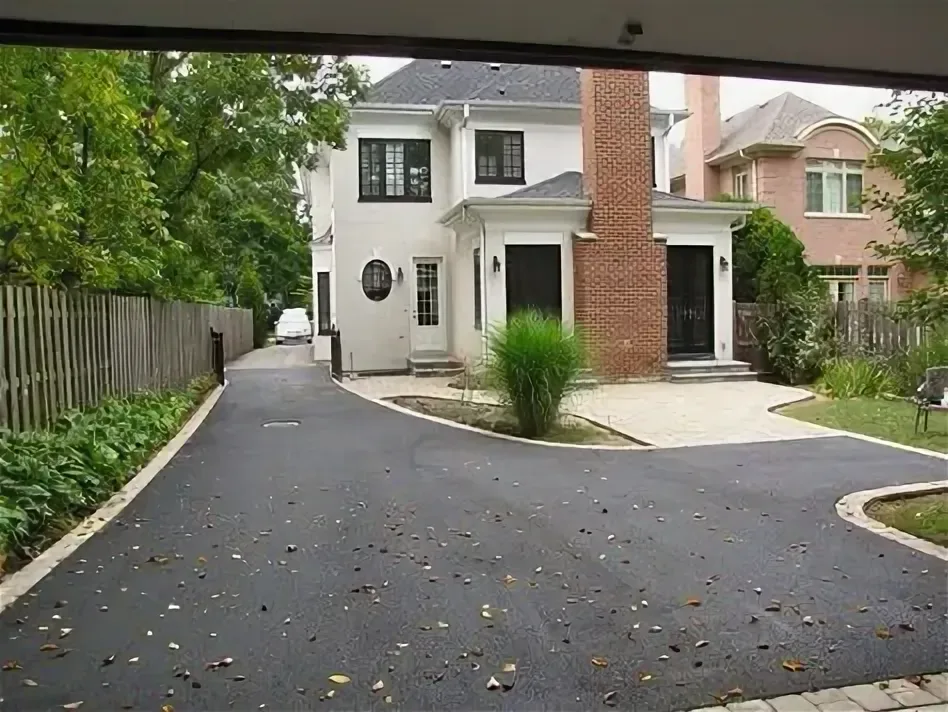
A 40 to 50 mm mat over a base we have walked and probed
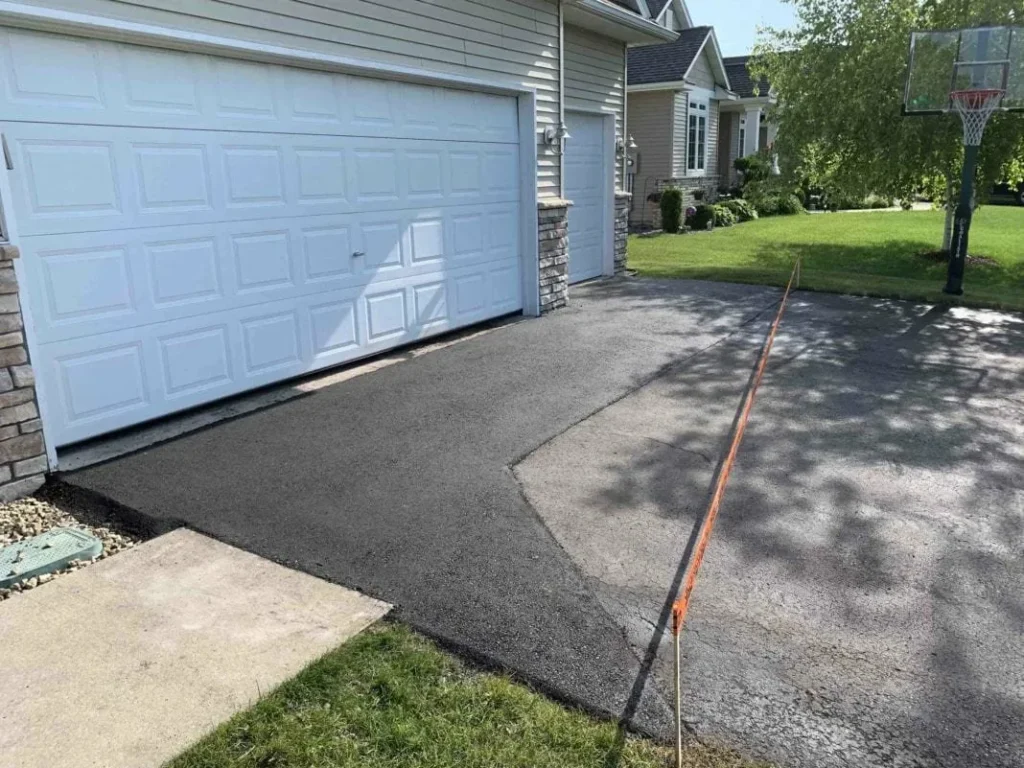
Milling where height at the garage door is tight
Cracks routed and filled before anything is laid
A straight no when the structure will not carry it
Find out if resurfacing will work
Tell us the size and roughly how old the surface is.
We will tell you if a rebuild is the honest answer.
The three checks that decide it
All three happen on site. None of them can be done from a photograph, which is why we will not price an overlay over the phone.
The crack pattern
Straight cracking and block cracking are surface conditions and overlay fine. Interconnected plates mean the base is flexing under load, and a new mat over that reproduces the same pattern within two seasons.
Firmness underfoot
We walk the whole area and push. Anything springy has water in the granular or soft clay worked up into it. Asphalt has no stiffness of its own to lend a base that has lost its.
Where the water sits
An overlay copies the shape of whatever it lands on. A driveway that ponds now will pond afterwards, slightly higher up. Grade is corrected by taking material out, not by adding a layer on top.
Cracks do not heal under new asphalt
Every crack wider than about 6 mm gets routed out and filled before an overlay goes anywhere near it. A crack is a joint that is already moving, and it does not stop moving because something warm was laid over it. Left alone it reflects straight up through the new mat along the same line, often inside the first winter. Isolated failed sections get saw-cut and patched full depth rather than feathered over the edge. Then the surface is cleaned down to sound asphalt, because the tack coat that bonds the new layer to the old one only works on a clean dry surface. Tack over dust bonds to dust. That is what delamination looks like when a resurfacing job peels away in sheets three years on.
Our Process
How an overlay is built
1
Walk it and probe it
The whole area gets walked and leaned on. Anything springy has water in the granular or clay worked up into it, and asphalt has no stiffness of its own to lend a base that has lost its.
2
Rout and fill the cracks
Every crack wider than about 6 mm is routed out to a clean reservoir and filled. Isolated failed sections get saw-cut and patched full depth rather than feathered over the edge.
3
Mill where height is tight
Grinding the top 40 to 50 mm off keeps finished height exactly where it started. Quoted as its own line because it depends on how much material comes off and gets hauled.
4
Clean, tack and lay
The surface is cleaned down to sound asphalt, because the tack coat that bonds the new layer to the old only works on a clean dry surface. Then a 40 to 50 mm mat goes down and is rolled inside its compaction window.
Height is the constraint most people forget
Adding 40 to 50 mm of asphalt raises the whole driveway by 40 to 50 mm. That is harmless in the middle of a run and awkward at both ends. At the house end, a raised driveway eats garage door clearance and moves finished grade closer to the foundation. Ottawa’s infill grading specification asks for 150 mm of clearance between the foundation wall and finished grade, and an overlay spends a third of that in one pass. It can also change which way meltwater runs in March, which is the worst possible month to find out. At the road end, the apron has to meet the existing edge cleanly, because a lip standing proud of the road is something a plough blade will find, and once a blade catches an edge the edge does not recover. Milling is the fix, and we measure at the door before the quote goes out rather than on the morning of the job.
40 to 50 mmThickness of a resurfacing mat, thin enough to compact and thick enough to take a plough blade
7 CMinimum air temperature at the road surface, rising, for a surface course under OPSS 310
150 mmClearance Ottawa's infill grading specification asks for between foundation and finished grade
6%Maximum driveway grade under the same specification
Resurfacing against the alternatives
Ottawa area ranges. What is underneath decides which of these lines applies to your driveway.
Most popular
Straight overlay
$2.50 to $6 per sq ft
Sound base and room for the extra 40 to 50 mm
Cracks routed and filled first
Typical 600 sq ft double $1,500 to $3,600
Tack coat over a surface cleaned to sound asphalt
Top layer ground off so finished height stays put
Used where a garage door or apron has no room
Protects the 150 mm foundation clearance
Grinding and haul-away priced as their own line
The answer once the base has actually failed
Alligator cracking, soft spots or standing water
Base corrected or rebuilt before any paving
Costs more once and less across fifteen years
Resurfacing is hot mix work and follows the same provincial rules as any other paving. These are checks you can make from your own front window.
What OPSS 310 requires
Air temperature at the road surface at least 7 C and rising for a surface course, no paving on a frozen roadbed, the surface being paved dry at the time of placement, and spreading and compaction finished by half an hour after sunset.
The practical window
Early May to about mid October in this city. Local plants reopened in the first week of May in 2026. Spring load restrictions of roughly 5 tonnes per axle run from early March to mid May and limit the trucks that haul aggregate and hot mix.
Why surface condition matters more over time
The City projects winter freeze-thaw cycling up 15 percent by the 2030s and 35 percent by the 2050s, with snow cover days dropping from 115 to 72. Less snow means less insulation and more bare surface cycling across zero. Milder winters are harder on asphalt, not easier.
Worth asking before you accept a resurfacing price
Did anyone walk it?
Soft spots are found with feet, not eyes. A quote produced from the street or from photos has not tested the one thing that decides whether an overlay survives.
What happens at the garage door?
Ask what the finished height will be and how much clearance is left. Ottawa's infill grading specification asks for 150 mm between foundation and finished grade, and an overlay spends part of that.
Are the cracks being repaired first?
If crack repair is not a separate line on the quote, it is probably not happening. Reflective cracking through a new mat is the most common resurfacing complaint in this city.
What does the warranty actually say?
Any workmanship warranty is set out in your written quote, job by job. A verbal promise on a driveway nobody probed is not worth much.
Driveway resurfacing leaves the old structure in place
Resurfacing means cleaning or milling the existing driveway, repairing what can be repaired, and laying a fresh 40 to 50 mm mat of hot mix over the top. The old asphalt stays where it is and becomes part of the structure. That is the entire idea and it is also the entire risk. You are trusting the layer underneath to keep doing its job for the next fifteen years.
Where that trust is earned, resurfacing costs a fraction of a repave. An overlay runs about $2.50 to $6 per square foot. Removing the same driveway and repaving it runs $8 to $14. On a 600 square foot double that gap is several thousand dollars for a result that looks identical on handover day. Where the trust is not earned, you have spent two or three thousand dollars to buy two more winters.
Three conditions that rule out driveway resurfacing
Alligator cracking is the first and clearest disqualifier. When a surface has broken into interconnected plates the way dried mud does, the base is flexing under load because it has lost bearing capacity, drainage, or both, and the pattern comes back through the new mat within a season or two.
Soft spots are the second. Anywhere that gives under your weight has water sitting in the granular, or clay pumped up into it, and a new surface does nothing to stiffen it.
Standing water is the third. An overlay follows the shape of what it is laid on, so a puddle survives at a slightly higher elevation. Correcting grade means removing material and rebuilding the profile, which is a different job with a different price.
Any one of these three means the honest answer is removal and rebuild. We would rather lose the overlay sale than come back in two years.
Any workmanship warranty is set out in your written quote, job by job. Call (343) 314-8525.
Resurfacing questions
How much does driveway resurfacing cost in Ottawa?
Roughly $2.50 to $6 per square foot for an overlay, which puts a standard 600 square foot double at about $1,500 to $3,600. Removing the old driveway and repaving runs $8 to $14 per square foot instead. Milling before the overlay sits between the two and is quoted per project because it depends on how much material has to come off and be hauled.
How thick is a resurfacing layer?
Normally 40 to 50 mm of hot mix. Thinner than that and there is not enough material to compact properly or to hold up to plough blades and turning wheels. Much thicker and you are raising the driveway more than the garage door and the road apron will tolerate.
Will the old cracks come back through?
They will if they are not dealt with first. A moving crack telegraphs up through a new mat along the same line, which is called reflective cracking. Routing and filling before the overlay slows it down considerably. Nothing eliminates it entirely, and any contractor saying otherwise is overselling.
When is milling necessary rather than optional?
When the added height causes a problem. A garage door with little clearance, an apron that would sit proud of the road edge, or a finished grade that would come too close to the foundation. Ottawa's grading specification also caps driveway grade at 6 percent, and adding material at the wrong end can push a marginal slope over that.
How many years does an overlay add?
On a genuinely sound base, an overlay behaves like a new surface and ages like one. On a base that was already failing, it buys one or two winters and then cracks in the same places. That is the whole reason we probe before quoting rather than after.
Find out whether an overlay is worth doing
We walk the driveway, probe for soft ground, check the height at the door and give you a number for the work that is actually needed.