Restriping and fresh layoutsAODA accessible stalls and aislesFire routes, hatching and arrows
Parking lot line painting in Ottawa, and the economics of a single visit
Restriping a parking lot runs $4 to $9 per stall in Ontario, plus a mobilisation charge of $150 to $350 per visit, with minimum jobs commonly $250 to $500. Paving Experts Ottawa prices the whole visit up front, so small lots know the full cost before booking.
Restripe over an existing layout, or measure and set a new one
Accessible stalls and access aisles laid out to AODA requirements
Fire route markings, hatching, arrows and stencils
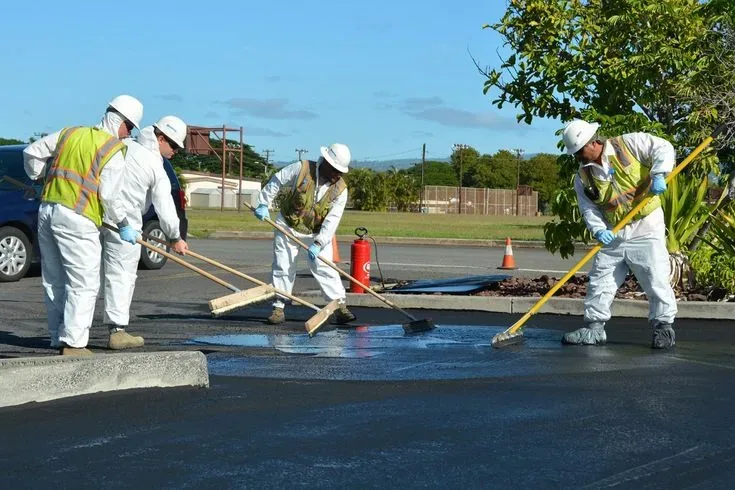
Surface swept and dry before any paint goes down
Get lines quoted
Tell us roughly how many stalls and whether the existing layout is still visible.
Small lots are usually best combined with other work.
What gets marked on a lot
Stalls are the visible part. The rest of it is what the lot needs to function and to comply.
Stalls and aisles
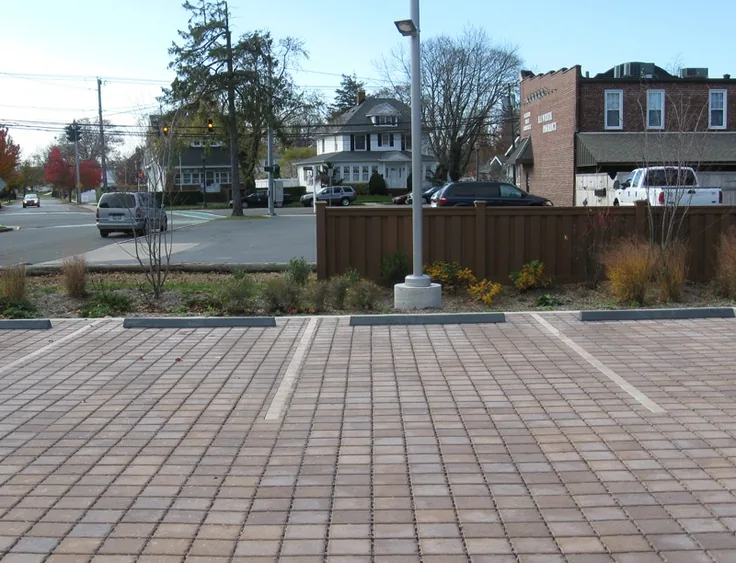
Standard stalls, end stalls, and the drive aisle markings that make the layout readable. The first stall in a row needs two lines, every adjacent stall shares one, which is why a row is cheaper per stall than a scattered set.
Accessible stalls
Accessible spaces with their marked access aisles, laid out to AODA requirements and positioned on the shortest accessible route to the entrance. Stencils, hatching and signage positions all form part of this.
Fire routes and directional markings
Fire route lines, hatched no-parking zones, painted curbs, directional arrows, crosswalks, and stencilled letters and numbers. These are linear and stencil items rather than stall items, and they price differently.
What line painting costs across Canadian markets
These are Ontario, Alberta and British Columbia typical ranges, published here as market context. They are NOT Ottawa rates. No Ottawa company publishes line painting prices, and the two Ottawa firms that surface in search offer a free quote only. Your number comes from a look at the lot.
Most popular
Restripe, per stall
$4 to $9 per stall in Ontario and the GTA
Across Canadian markets the range widens to $4 to $20
First stall in a row $6 to $14, it needs two lines
Adjacent stalls $3 to $7, they share a line
Ottawa rates are quoted per job, not per stall
Charged on top of the stall rate
Minimum job commonly $250 to $500
This is why small lots pay more per stall
Best combined with a sealcoat or repair visit
Fire routes, hatching and painted curbs by the foot
Accessible and wheelchair stencils $15 to $60 each
Traffic arrows $15 to $40, crosswalks $50 to $200
Stencilled letters and numbers $5 to $200 by size
Why a small lot should never be a standalone visit
Take the published Canadian numbers at face value and the arithmetic is stark. Twelve stalls at the Ontario range of $4 to $9 each is somewhere between $48 and $108 of stall work. Mobilisation at $150 to $350 sits on top of that, and minimum job charges commonly land between $250 and $500. The paint is a rounding error. What you are actually paying for is a crew, a machine, a truck, the travel and the setup, and none of those get cheaper because your lot is small. The sensible response is not to shop for a cheaper painter, because the same fixed costs apply to all of them. It is to stop treating line painting as a standalone errand. Schedule the restripe onto the back of a sealcoat visit, a crack sealing visit or a repair visit, when the crew and the equipment are already on your property and the surface has just been prepared.
2 linesThe first stall in a row needs two, every stall after it shares one
$150-350Mobilisation per visit in Canadian markets, not an Ottawa rate
$250-500Typical minimum job across Canadian markets, not an Ottawa rate
Free quoteWhat the Ottawa firms that surface in search actually publish
Accessible stalls get located when the layout is set
Accessible parking is the part of a lot where getting the layout right matters most, and it is not a paint decision that can be sorted out at the end. Accessible spaces need their marked access aisles, they need to sit on the shortest accessible route to the building entrance, and their dimensions and quantities follow the Accessibility for Ontarians with Disabilities Act requirements that apply to your property. The stencil, the hatching on the access aisle and the signage position are all part of the same arrangement. The practical implication is that accessible stalls have to be positioned when the layout is set, because moving them later can mean moving the accessible route, the curb ramp or the signage as well. If you are re-configuring a lot, that is the first thing to fix on the plan, and everything else arranges itself around it.
Paint, thermoplastic and the surface underneath
Material choice is straightforward and mostly decided by the traffic. Surface condition decides whether any of it lasts.
Water-based traffic paint
The normal choice for parking lots. It goes down fast, dries quickly enough to reopen the area the same day and is inexpensive to renew. Its weakness is wear, and in this climate the wear comes as much from snow clearing as from tyres.
Thermoplastic and MMA
Thermoplastic and methyl methacrylate cost more to apply and last considerably longer under heavy traffic. Worth considering on high-volume entrances, fire routes and any marking you do not want to renew often. The sensible pattern is durable material where traffic concentrates and paint everywhere else.
A swept, dry surface
Whatever the material, the surface decides the outcome. Paint applied over grit, dust or damp asphalt does not bond properly, and the first winter takes it off. Waiting a day for a dry surface costs nothing. Repainting a lot in the spring costs the whole job again.
Getting a line painting job right
The surface has to be swept and dry
Paint applied over dust, grit or damp asphalt does not bond and will not last a winter. If nobody has mentioned sweeping, the quote has left out the step that decides the outcome.
A fresh layout is not a restripe
Restriping follows lines that are still visible. A fresh layout has to be measured, set out and chalked from scratch, which is slower and costs more. Say which one you need when you ask for a price.
Accessible stalls are not optional detail
Accessible spaces and their access aisles are laid out to AODA requirements, on the shortest accessible route to the entrance. Get them right when the layout is set rather than after the lot is full.
Ask what the warranty position is
Any workmanship warranty is set out in your written quote, job by job. Paint is a wearing product on a surface that gets ploughed every winter, and any honest quote treats it that way.
Ask about lines
The quickest route to a real number is telling us the stall count and when the lot was last painted.
Call the office
Talk through the layout, the stall count and timing. (343) 314-8525
Line painting is priced in a way that confuses small property owners, and it is worth clearing up before you go looking for quotes.
The per stall figures that circulate are real. Across Ontario and the GTA, restriping is commonly quoted at roughly $4 to $9 per stall, and across Canadian markets more broadly the range runs $4 to $20. Those are Ontario, Alberta and British Columbia figures. We want to be explicit that they are not Ottawa prices. No Ottawa company publishes line painting rates at all, and both of the Ottawa firms that surface in search show a free quote and nothing else. We are giving you proxy market data, labelled as proxy market data.
Now put those numbers next to the fixed costs. Mobilisation commonly runs $150 to $350 per visit in those same Canadian markets, and minimum job charges typically land between $250 and $500. For a twelve stall lot, the stall work is somewhere around $48 to $108 at Ontario rates and the fixed costs are three to five times that.
A crew, a line machine, a truck, travel time and setup cost the same whether they mark twelve stalls or a hundred and twenty. The useful conclusion is not to find a cheaper painter, because every contractor carries the same fixed costs. It is to stop buying line painting as a standalone visit.
Restripe or fresh layout, two different line painting jobs
A restripe works over a layout that is still readable. The spacing is already set and the work is essentially tracing at speed. It is the cheapest version of the job.
A fresh layout is a different task. The lot has to be measured, the stall module and aisle widths set out, the accessible spaces positioned on the accessible route, the fire route established, and the whole thing chalked before a drop of paint is applied.
Lots left too long fall into the second category even though the owner thinks they are in the first. Once the old markings are ghosts there is nothing reliable to follow, and the delay has converted the cheap version of the job into the expensive one.
Any workmanship warranty is set out in your written quote, job by job. Call (343) 314-8525.
Line painting questions
What does line painting cost in Ottawa?
We quote it per job after looking at the lot, and we are not going to publish an Ottawa per stall rate we cannot stand behind. No Ottawa company publishes line painting prices, and the Ottawa firms that surface in search offer a free quote only. For context, Ontario and GTA restriping is commonly quoted at $4 to $9 per stall, widening to $4 to $20 across Canadian markets, with mobilisation of $150 to $350 per visit and minimum jobs of $250 to $500. Those are Ontario, Alberta and British Columbia figures, not Ottawa numbers.
How often should a lot be restriped?
It depends on traffic and how the lot is cleared in winter. Plough blades take paint off faster than tyres do, so a lot that gets scraped hard every storm loses its markings quicker than one that does not. The practical test is whether a driver arriving at night can read the layout. Once stalls are being guessed at, or an accessible stall is no longer clearly marked, it is overdue.
When can lines be painted in Ottawa?
Through the paving season, which practically runs early May to mid October here. The surface has to be swept clean and dry when the paint goes down, so a wet week moves the date. Painting onto a damp or dusty surface is the most common reason markings do not survive their first winter, and it is entirely avoidable by waiting a day.
How wide does an accessible parking space have to be?
Accessible parking spaces and their access aisles are set by the Accessibility for Ontarians with Disabilities Act requirements that apply to your property type, and the dimensions differ between space types. We lay out accessible stalls and aisles to those requirements and position them on the shortest accessible route to the entrance. Because the requirements depend on your specific property, we confirm the applicable dimensions as part of the layout rather than assuming them.
Can you paint over faded lines or do they need removing?
Faded lines are usually painted straight over, and the old markings are useful because they give the crew the layout to follow. Removal comes into it when the layout is changing, because a ghost line from a previous configuration confuses drivers and makes a new layout harder to read at night. If you are re-configuring the lot, say so at quote stage, because removal is separate work.
Get your lot marked out properly
Stall count, accessible spaces, fire routes and linear markings, quoted on one visit.