Asphalt vs Concrete Driveway in Ottawa: Which Costs Less?
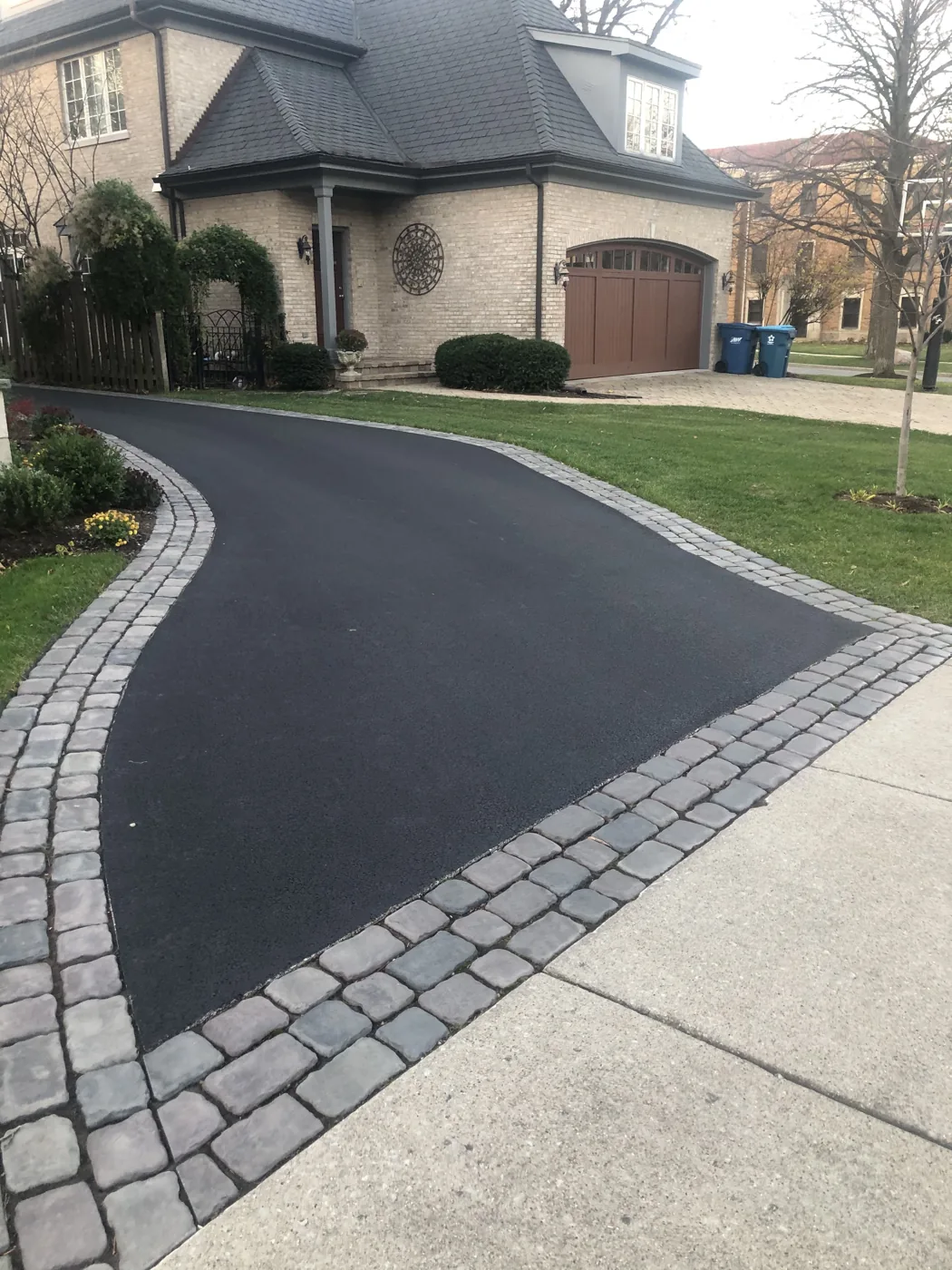
In an asphalt vs concrete driveway comparison, asphalt costs less to put in. We price new asphalt driveways in Ottawa at $5 to $10 per square foot and plain broom-finish concrete at $9 to $18 per square foot. The rest of the difference comes down to upkeep, winter and the clay under your driveway.
These are starting ranges for a driveway that does not need an old paved surface removed. Removing an old driveway, extra excavation or drainage work raises the price, and we quote every driveway on its actual site conditions.
Key takeaways
- On a 600 sq ft driveway, new asphalt runs about $3,000 to $6,000 and broom-finish concrete about $5,400 to $10,800.
- Asphalt is sealed every two to three years. Concrete takes a penetrating sealer every five years or longer.
- Road salt can scale the surface of concrete, especially when it is new or unsealed. Asphalt does not scale the same way, though saltwater and freeze-thaw cycles still wear it over time.
- On Ottawa clay, the base under the driveway decides how long either surface lasts.
How much does an asphalt driveway cost in Ottawa?
A new asphalt driveway costs $5 to $10 per square foot. That covers excavation, a compacted granular base and the asphalt surface, laid on bare ground or an existing gravel driveway. On a typical 600 square foot double, that works out to about $3,000 to $6,000.
If an old driveway has to come out first, we price remove and repave at $8 to $14 per square foot. Breaking out and hauling the old surface runs about $3 to $5 per square foot on its own, which is why the rate jumps. Where soft clay or standing water means a deeper build, we quote it per project after probing the ground.
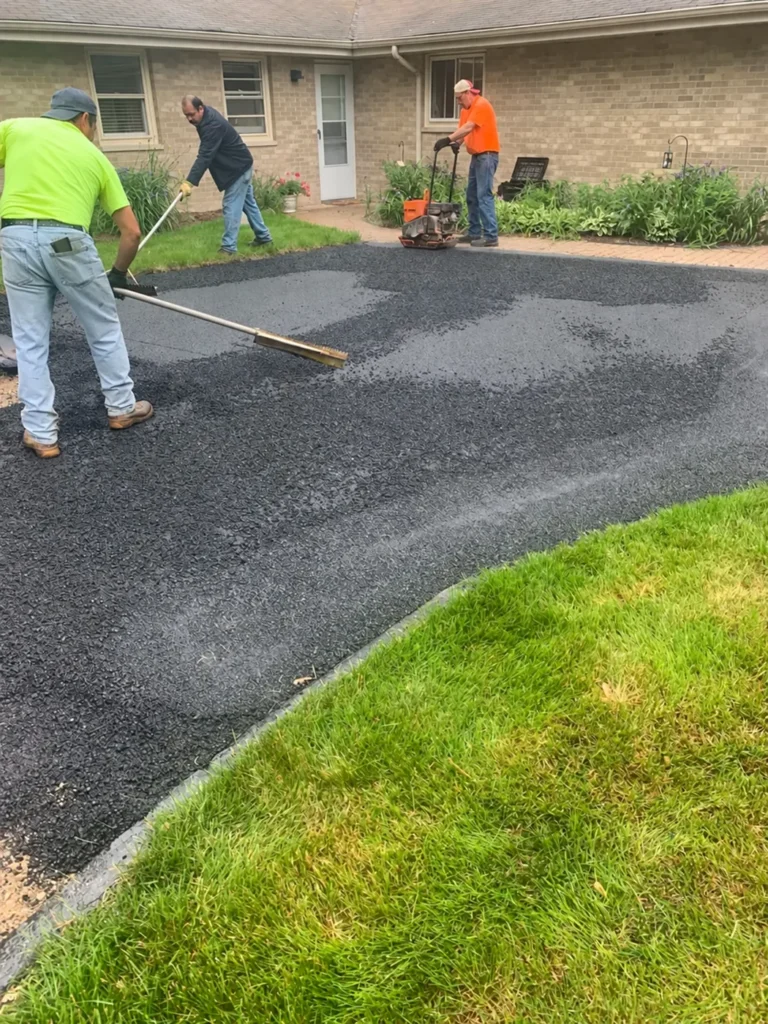
Most installs take two to three days: removal and excavation, then base placement and compaction, then paving. Our asphalt driveway installation page walks through each stage.
How much does a concrete driveway cost in Ottawa?
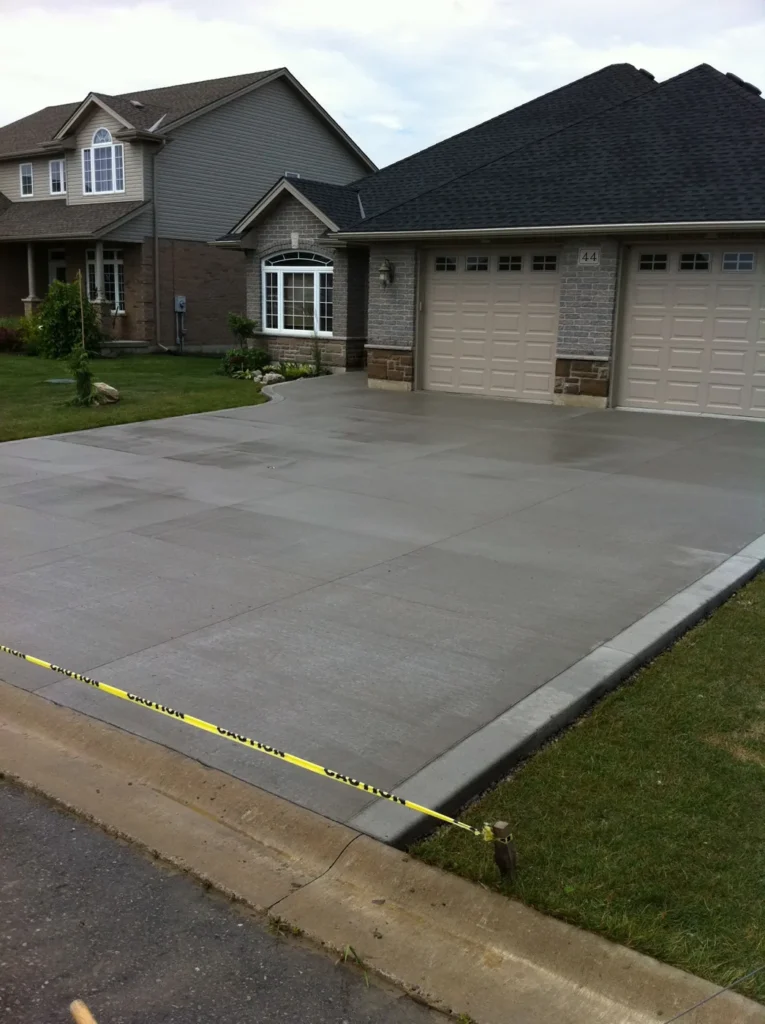
Plain broom-finish concrete costs $9 to $18 per square foot, which puts a 600 square foot driveway at about $5,400 to $10,800. Decorative finishes cost more. Exposed aggregate runs $11 to $32 per square foot and stamped concrete $18 to $30. Reinforcement mesh or rebar adds $0.50 to $2 per square foot.
If there is old concrete under your current driveway, removal costs more, so find out what is down there before comparing quotes.
Which costs more to maintain, asphalt or concrete?
Over the life of an asphalt vs concrete driveway, concrete needs attention less often, but each visit costs more. We seal an asphalt driveway once it has cured for 6 to 12 months, at $0.25 to $0.55 per square foot, or roughly $150 to $350 for a standard double. Concrete takes a penetrating sealer at $1 to $3 per square foot, which comes to $600 to $1,800 on a 600 square foot driveway.
Asphalt also benefits from crack sealing, at $200 to $500 a visit, because it is the one repair that stops water reaching the base. Sealing asphalt every year does more harm than good. The coats build up into a thick, brittle layer that cracks and peels and has to be stripped.
How does road salt affect asphalt and concrete driveways?
Road salt is harder on concrete than on asphalt. Salty meltwater soaks into the concrete surface, freezes, and breaks off the top layer of paste, exposing the stone underneath. This is called salt scaling. Each layer it removes leaves a rougher surface that absorbs more salt the following winter.
Ottawa uses large quantities of road salt every winter, and plow spray and tires carry it onto your driveway whether you salt it yourself or not. A concrete driveway here needs an air-entrained mix and a penetrating sealer to hold up. Keeping de-icer off a new slab for its first winter helps more than either.
Asphalt does not scale the way concrete does, but saltwater working into open cracks through repeated freeze-thaw cycles still wears it down. Keeping cracks sealed limits that damage.
Which handles Ottawa clay and frost better?
Asphalt copes with ground movement better, because concrete cannot flex. Much of Ottawa sits on Champlain Sea clay that holds water and moves through every freeze-thaw cycle. Concrete shrinks as it cures and cracks when the ground shifts, so we cut control joints to decide where those cracks go.
Repairs differ too. A failed section of asphalt is saw-cut and patched full depth so it keys into the sound asphalt around it. Concrete cannot be patched invisibly, so a repair always shows.
Which lasts longer, an asphalt or concrete driveway?
Concrete generally has the longer potential lifespan, while asphalt is easier and less expensive to repair. Both can last for decades when the base is built properly and the driveway is maintained. Poor drainage, a thin base, heavy loads and Ottawa’s freeze-thaw cycles shorten the life of either surface.
When you are deciding whether to repair or replace, judge the driveway by its condition, not its age. A well-drained older driveway with tight cracks may only need sealing, while a newer one holding water over a failed base may need rebuilding.
How soon can you drive on a new driveway?
Asphalt is ready much sooner. In normal summer weather, a new asphalt driveway takes light traffic within a day or two, although sharp turns and heavy loads should wait longer while it hardens. Concrete takes foot traffic first and vehicles much later. The exact wait depends on the mix, the weather and the slab thickness, so we give you dates for your own pour.
The season matters as well. Asphalt paving depends on the weather, and we schedule work for temperatures that allow proper placement and compaction. For common surface-course work, the Ontario standard OPSS 310 uses a threshold of 7 C and rising, although requirements vary by mix and pavement type.
Should you choose asphalt or concrete in Ottawa?
Choose asphalt if the upfront price matters most or the driveway sits on soft clay. Choose concrete if you want a decorative finish and will keep it sealed against salt. A long rural laneway is usually asphalt, tar and chip or gravel, because a concrete rate per square foot adds up fast over a long run. A short, highly visible frontage is where concrete earns its price.
If you are weighing an asphalt vs concrete driveway, Paving Experts Ottawa quotes both surfaces after a site visit, with base depth, drainage and finish on separate lines, so you can compare them line by line. See our concrete driveway page for finishes and joint layout, or call (343) 314-8525 for a free written quote.